Is a Compact Track Loader a Skid Steer?
By Sany of Pennsauken • February 5, 2026

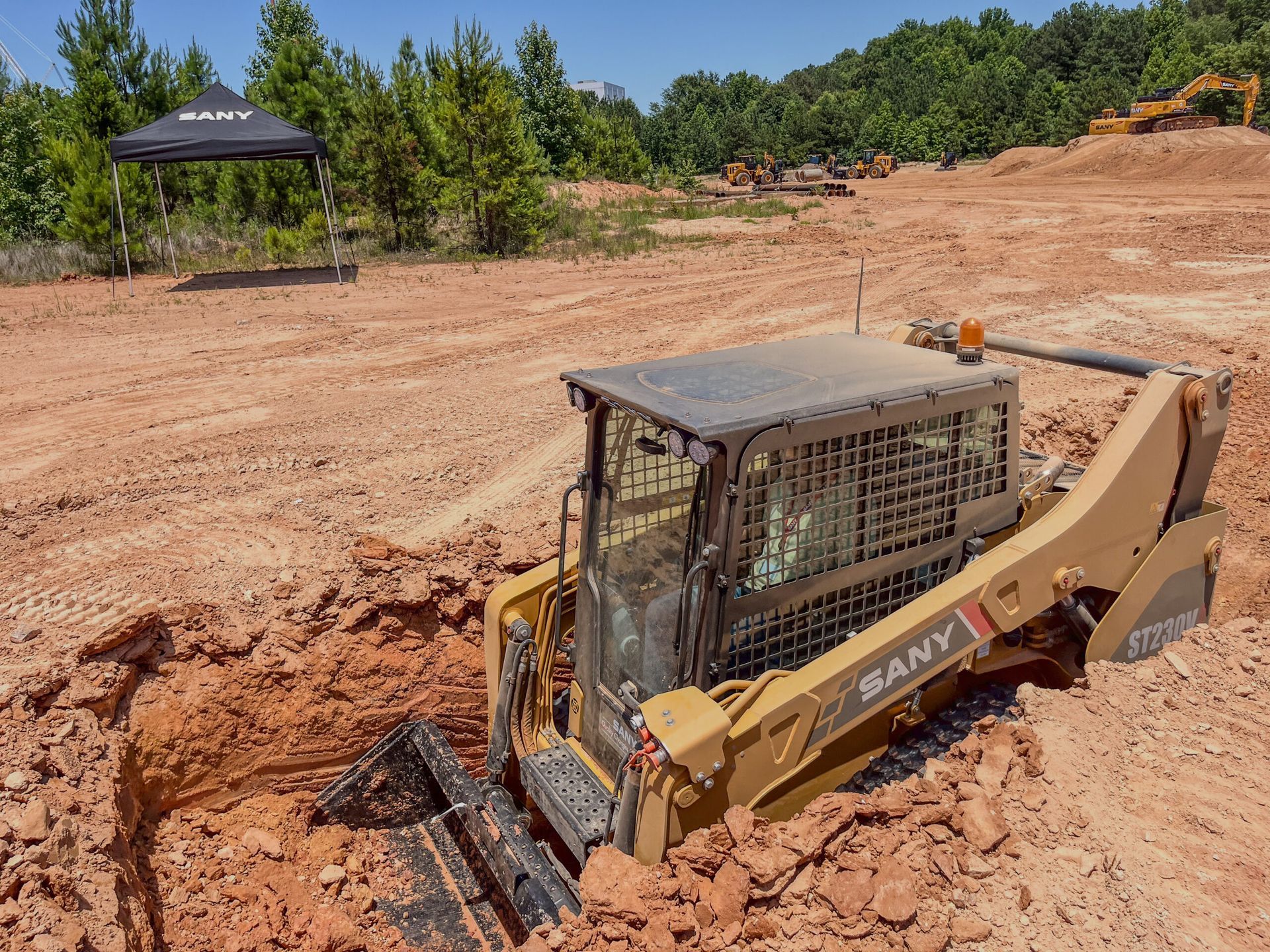
Yes and no. A compact track loader is in the skid steer family because it turns the same way and runs the same style of loader arms and attachments, but it isn’t the same machine as a wheeled skid steer.
Here’s the simplest way to picture it: two machines can be the same size, run the same bucket and forks, and squeeze through the same gate, but one rides on tires and the other rides on tracks. That undercarriage changes day-to-day life on a jobsite, traction, ground damage, comfort, and what it costs to keep the machine moving. If you want a deeper look at how backhoe loaders and track loaders fit into real work in NJ and the Philly area, see Explore SANY Backhoe & Track Loader Models ST230V & SBL95C.
Call 609-546-3799 to speak with SANY to learn more about our machines or fill out this form to book a demo.
What makes a skid steer a skid steer, and where track loaders fit
People say “skid steer” on jobsites the way they say “Kleenex.” They often mean the whole class of compact loaders that can run a pile of attachments. That’s why the terms get mixed up.
A skid steer, at its core, is defined by how it steers and how it’s laid out. It’s a compact loader with lift arms, a front quick-attach plate, and a drive system that can power the left and right sides at different speeds. That last part is the key.
Both a wheeled skid steer and a compact track loader steer by skidding. They don’t turn with a front axle like a tractor. They turn by slowing one side and speeding the other side, which makes the machine pivot and “scrub” the ground underneath it.
That shared steering style is why operators treat them like close cousins. You can train an operator on one and they’ll feel at home on the other pretty quickly. You can also plan attachments in a similar way, because many compact track loader setups accept the same common tools you’d run on a skid steer, like buckets, pallet forks, grapples, brooms, and augers (always confirm your coupler style and hydraulic flow before you buy).
The simple definition: turning style matters more than tires or tracks
Skid steering happens when the left and right sides drive at different speeds . One side pushes harder, the other side drags or reverses, and the machine turns without a steering wheel doing the work at the tires.
That’s why you’ll hear people say “skid steer” even when they’re talking about a tracked machine. On a busy job, they’re usually describing the function, not the undercarriage.
Compact track loader basics: same idea, different undercarriage
A compact track loader uses rubber tracks wrapped around wheels, rollers, and sprockets. Instead of four tire contact patches, you get a longer, wider footprint on the ground.
In plain terms, that changes three big things in daily use:
- The machine spreads its weight out , so it sinks less in soft ground.
- It usually feels more planted when pushing into a pile or grading.
- There’s more going on down low, so undercarriage condition becomes a bigger deal for maintenance and long-term cost.
Compact track loader vs wheeled skid steer, what changes on real jobsites
Choosing between a compact track loader and a wheeled skid steer is rarely about which one is “better.” It’s about where you work and what the ground does after a week of weather, trucks, and foot traffic.
Here’s what tends to matter most to contractors and fleet managers:
- Traction and push : Tracks usually bite and hold better in mud, wet clay, loose fill, sand, and snow.
- Flotation (staying on top) : Tracks often sink less because the footprint is larger.
- Ground disturbance : Wheels can rut when they spin, tracks can scuff when they pivot. Different kind of damage.
- Ride feel : Tracks often smooth out rough ground, wheels can feel faster and more responsive on hard surfaces.
- Maintenance : Tires are simpler, track undercarriages have more wear parts.
- Cost to own : It depends on surfaces, hours, and operator habits, not just the purchase price.
Two quick jobsite snapshots make this real:
On a muddy residential addition where trucks already chewed up the yard, a compact track loader can keep moving while a wheeled skid steer fights for grip. On a demo job where you’re turning all day on concrete, a wheeled skid steer may feel like the more practical choice because tires and hard surfaces tend to get along.
Traction and float, why tracks win in mud and soft ground
Tracks shine when the jobsite is soft, wet, or inconsistent. That includes rough grading, backfill that hasn’t packed yet, wet clay that sticks to everything, sandy access roads, and snowy lots where tires keep hunting for bite.
Because the track footprint is bigger, the machine usually gets less wheel spin and less sink , which helps in two ways: you stay productive, and you spend less time repairing the mess from getting unstuck.
Operators also tend to notice stability when the ground is uneven. A tracked machine often feels steadier when you’re carrying a load across ruts or working on a slope.
A safety reminder that’s worth saying out loud: stability doesn’t mean invincible. Follow the operator’s manual, keep loads low, and stick to site rules for slopes and travel paths.
Surface damage and turning, when tracks can still tear things up
Tracks can be gentler in some ways because they spread weight out. That can mean fewer deep ruts in soft ground, which is a big deal on lawn work, new seed, or finished grade.
But skid steering is still skid steering. When you pivot in place, the tracks can shear the surface, especially on turf. On asphalt, tracks can leave marks, and on pavers they can scuff edges if you’re careless.
A few operator habits can reduce the damage without slowing the day down:
- Make wider turns when space allows, instead of pivoting in place.
- Avoid sharp pivots on finished lawns, use a multi-point turn.
- Match the track type to the work when possible (tread style matters for turf vs hard pack).
If you’re doing delicate finish work, sometimes the best “attachment” is patience.
Maintenance and operating costs, tires vs undercarriage parts
This is the tradeoff that decides it for a lot of owners. Tires are straightforward. You watch pressure, manage punctures, and replace them when they’re done.
A compact track loader undercarriage has more wear points. Tracks, rollers, idlers, sprockets, and proper tension all matter. If the machine is run on jagged demo debris or spun hard on pavement, wear can show up faster.
The simple rule of thumb looks like this: if your work lives in mud and soft ground, tracks often pay back in uptime and productivity. If most of your hours are on pavement, concrete, or hard pack, wheels can be cheaper to run and easier to maintain.
If you’re trying to predict cost, don’t guess in a vacuum. Ask your dealer about parts, service intervals, and what your surfaces do to wear items.
SANY machines to compare for your fleet, ST230V compact track loader and SBL95C backhoe loader
Sometimes the real question isn’t “compact track loader vs skid steer.” It’s “what machine covers the most of my work without headaches?”
If your crew needs a tight, attachment-friendly loader for prep, grading, and material handling, you’re usually looking at a compact track loader like the ST230V. If you need true digging, truck loading, and easy travel around larger sites, a backhoe loader like the SBL95C can make more sense than any skid steer-style machine.
If you want to see how these categories stack up for local contractors, SANY Backhoe Track Loader for NJ & Philly is a helpful starting point, then you can call sales or rental to match a model to your job mix.
Why the SANY ST230V compact track loader makes sense when you need traction and a small footprint
The ST230V fits the pattern a lot of contractors want: compact size, strong loader work, and the track advantages that matter when the site isn’t friendly.
A few practical reasons fleets choose a compact track loader like the ST230V:
- Track traction and stability for soft ground, rough access, and wet conditions.
- Strong loader performance for grading, backdragging, and moving material all day.
- Attachment flexibility with common tools (buckets, forks, grapples, augers), which helps one machine cover more tasks.
- A good fit for site prep, landscaping base work, and light demo cleanup where you need mobility and push.
If you’re deciding between tracks and wheels for your next buy, come in for a heavy machinery demo. You can also book a tow and show so your crew can see how it feels on your ground, not someone else’s.
Where the SANY SBL95C backhoe loader is the better tool than any skid steer-style machine
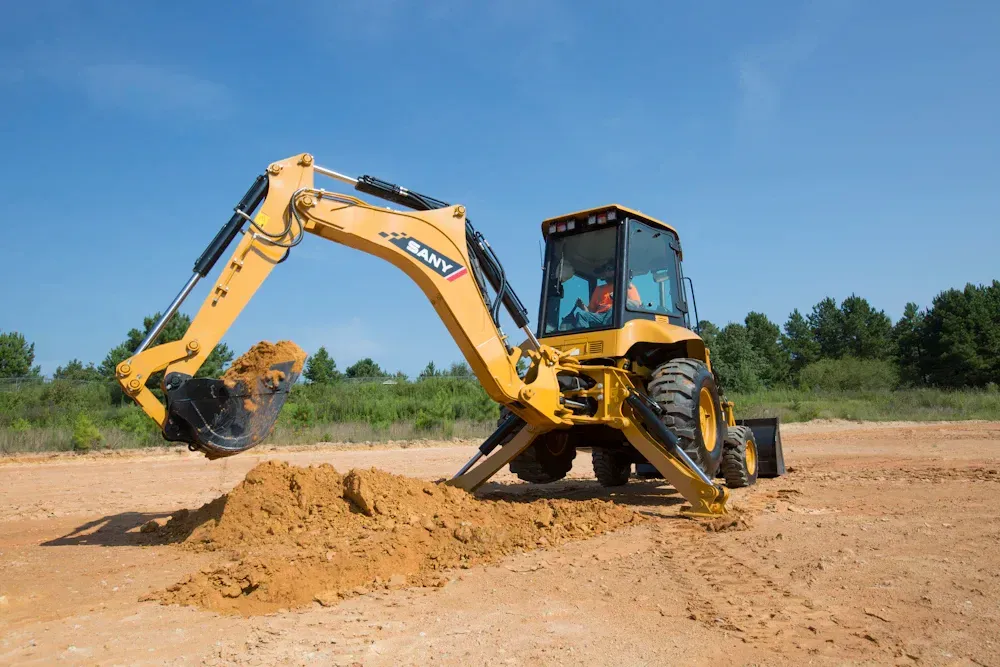
A backhoe loader is different by design. You’ve got a rear digging arm for trenching and excavation, plus a front loader for stocking material, backfilling, and loading trucks. It’s a true “dig and load” machine, and it can move around bigger sites without feeling like it’s constantly repositioning.
The SBL95C makes sense when the work centers on utilities and digging, not just moving material:
- Trenching and drainage work where consistent digging reach and control matter.
- Utility repairs where you need to dig, stage spoils, and backfill quickly.
- Road and site maintenance where traveling around the site is part of the day.
- Stabilizers that help keep the machine steady while digging.
If you’re building a plan for the season, call sales or rental to talk through what you’re running now and what’s slowing you down. If you’re already operating equipment and need support, call for parts or service so downtime doesn’t eat the schedule. If cash flow is part of the decision, ask about options, in-house financing available.
How to choose fast, match the machine to your ground, timeline, and attachment plan
The fastest way to make the right call is to start with the ground, then work outward.
If you’re always on soft sites, a compact track loader can keep the day moving when weather hits. If you’re mostly on hard surfaces and doing tight turning on concrete, a wheeled skid steer can be a clean, cost-smart tool. If you need to dig trenches daily and also load trucks, a backhoe loader belongs in the conversation.
Don’t forget the “boring” factors that decide ownership success:
Hauling limits matter. Tracks add weight, and that can change trailer and truck requirements. Travel distance on site matters too. If you’re moving far across a big project, the right machine can save operator fatigue and time.
Operator comfort counts in the real world. A machine that rides better and keeps traction reduces the stress that leads to mistakes, torn-up ground, and rushed maintenance.
A quick decision checklist you can use before you rent or buy
- What’s the ground like most days, mud and soft fill, or concrete and hard pack?
- Do you need to dig trenches daily, or mostly load, grade, and carry?
- How tight is access, gates, backyards, and between buildings?
- What attachments will you run, and do you need high-flow hydraulics?
- How often will you move the machine between sites, and what can you legally haul?
If you want a straight answer for your next job, schedule a demo and talk through the work, the surfaces, and the attachments your crew already owns.
Conclusion
A compact track loader is part of the skid steer family, but it’s not the same as a wheeled skid steer. Tracks usually win on soft ground and traction, wheels often win on hard surfaces and simpler upkeep, and a backhoe loader wins when digging is the main event plus you still need to load and move material.
Call 609-546-3799 to speak with SANY to learn more about our machines or fill out this form to book a demo. Come in for a heavy machinery demo, book a tow and show, ask about in-house financing available, and reach out anytime to call for parts or service so your fleet stays ready.
5 Years / 5000 hours
Warranty on SANY
Heavy Machinery Sales
Get the right heavy machinery for your next project. Serving New Jersey, Southeastern Pennsylvania, Greater Philadelphia, NY (boroughs & LI).
Heavy Equipment Rental NJ
Reliable Machines. Fast Turnaround. Local
Support You Can Depend On.
SHARE THIS