Cheap Backhoe for Sale: Cost vs Long-Term Value (What Buyers Miss)
You’re scrolling listings, you spot a cheap backhoe for sale , and your brain does the quick math. “If I move fast, I can save a few grand.” That buying moment is real, especially when the crew’s busy and you’ve got work booked out.
The problem however, a low price can be a win, or it can be a trap. The difference usually shows up later as repairs, downtime, parts delays, and weak resale. Before you jump, compare your options and demo that backhoe for sale to be sure that fit your job mix and support needs.
Call 609-546-3799 to speak with SANY to learn more about our machines or fill out this form to book a demo.
SANY of Pennsauken serves contractors across NJ and PA, including the Philadelphia area and South Jersey.
What “cheap” really means when you are buying a backhoe
“Cheap” can mean a few different things, and not all of them are bad.
Sometimes it’s cheap because the owner needs cash fast. Sometimes it’s cheap because the machine is tired, with high hours and loose pins. Other times it’s cheap because nobody can explain its history, it has no service records, and the seller’s answer to every question is, “It runs good.”
Two machines can be listed at the same price and have totally different value. One might have clean maintenance logs, solid hydraulics, and a seller who can show receipts. The other might be $10,000 cheaper than market, but needs pins, bushings, and tires in month one. That “deal” disappears fast.
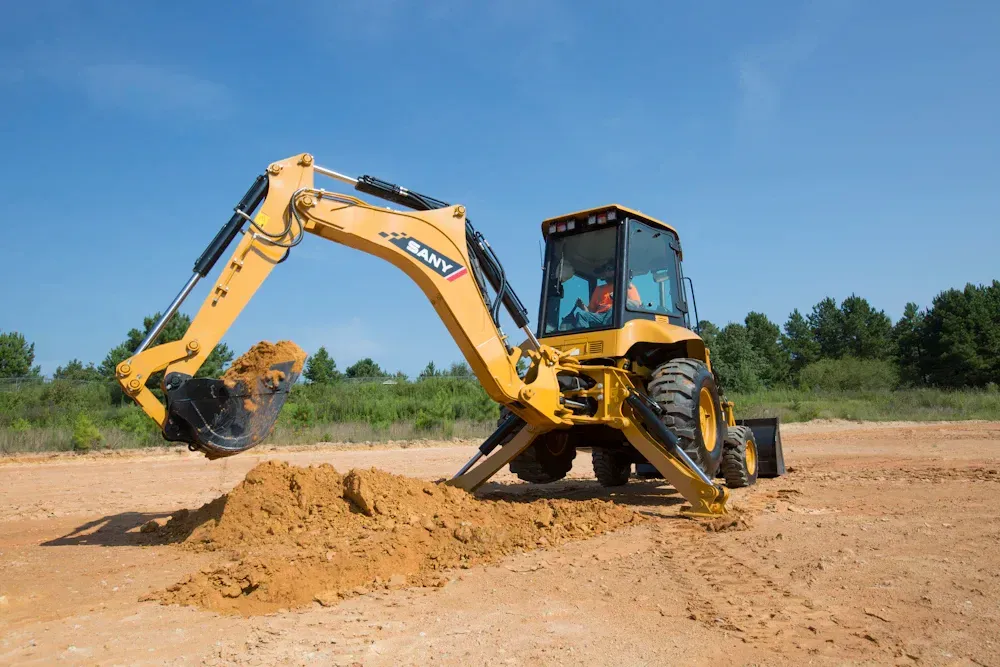
Before you shop by price alone, it helps to compare machine types, typical specs, and support options in one place, like this overview of SANY backhoe loader for NJ & Philly. Price matters, but it’s only the first line on the cost story.
New, used, and auction machines, what you gain and what you give up
Most buyers end up in one of four lanes, and each lane has trade-offs.
Buying new usually means warranty coverage, known history, and fewer surprise repairs early on. It also means a higher payment. On a busy crew, that payment can be easier to handle than a machine that sits.
Buying used from a dealer can be a sweet spot. You may get inspections, basic reconditioning, service records, and someone who answers the phone when you need parts or help. It’s not perfect, but it lowers the odds of buying somebody else’s problem.
Buying from a private seller can save money up front. It can also turn into a long chase for missing paperwork, hidden leaks, or “recent work” that was really just a quick patch.
Auctions are fast, and sometimes you land a good unit. The risk is you usually don’t get much time to test, you might not get a cold start, and you own the machine the second the hammer drops.
Here’s the hard truth: downtime often costs more than a monthly payment when your crew is scheduled tight. If the backhoe is your daily tool, reliability has a price, and it’s worth paying attention to.
The hidden costs that make a “deal” expensive
The backhoe’s sale price is the easy part. The hidden costs are what drain the budget, especially when you buy a machine with unknown wear.
Some costs are normal wear items. Others are “surprise” costs that show up right after you get it home, when you’re already committed. And some aren’t even mechanical, like hauling and insurance.
Top hidden costs that catch buyers off guard:
- Hydraulic hoses and fittings : Small leaks become big bills fast, and messy jobsites bring complaints.
- Pins and bushings : Slop in the boom or dipper makes grading and trenching slow and rough.
- Tires and rims : Uneven wear can hint at alignment issues or hard curb work.
- Electrical gremlins : Corrosion, hacked wiring, and dead sensors waste hours.
- Buckets and couplers : Worn edges, cracked welds, or mismatched attachments cost real money.
- Transport and permits : Delivery fees, escort needs, and scheduling add up.
- Safety and compliance checks : Lights, alarms, brakes, and operator safety items can’t be ignored.
Even if the machine “runs,” a few of these in the first month can erase the savings that got you excited in the first place.
Do the math: total cost of ownership over 3 to 5 years
You don’t need a spreadsheet the size of a bid package to make a smart call. You just need to think in totals, not sticker price.
A simple way to frame it is this: your real cost is the purchase price, plus maintenance, plus repairs, plus fuel, plus downtime, minus what you can sell it for later. That’s it. No fancy math, just honest inputs.
The key is to plan for real use, not best case. If you’re working utility trenches, road patch, or site work five days a week, the machine will wear like it’s working five days a week. If you only need it for occasional trenching and light loading, your maintenance pace and resale timeline will look different.
It also helps to match the machine to the work so the numbers stay predictable. The wrong machine type can burn fuel, stress components, and slow cycle times. If you’re comparing setups, start by reviewing backhoe loader rental and sales options so you’re not forcing one machine to do a job it hates.
A simple checklist to compare two backhoes side by side
When you’re staring at two “good deals,” this kind of checklist keeps you from getting distracted by shiny paint.
- Hours and idle time : High hours aren’t always bad, but hours with no records are.
- Service records : Oil changes, filters, hydraulic service, and any major repairs.
- Tire wear : Check tread depth and uneven wear patterns.
- Hydraulic leaks : Look at cylinders, valve banks, and hose routing.
- Boom and dipper play : Excess movement often means pins and bushings are due.
- Engine blow-by : Check the breather, and watch for excessive smoke.
- Cab controls and gauges : Sloppy controls and warning lights matter.
- Attachment fit : Bucket pins, coupler tightness, and any included tools.
- Undercarriage (if applicable) : On track units, wear here can be a huge cost.
- Warranty and dealer support : What’s covered, and who actually services it.
If you can, bring an operator who knows the feel of a healthy machine. A ten-minute test run with the right person can save you months of headaches.
Resale value, warranty, and support, the stuff that protects your budget
Resale value isn’t just a nice bonus. It’s part of your exit plan.
Machines that are easy to service, have parts available, and come with a strong warranty tend to hold value better. Buyers pay more for equipment they trust. They also pay more when they know support exists after the sale.
Warranty can also reduce the fear factor. A slightly higher purchase price can end up cheaper when it lowers your repair risk. Think of warranty as budget protection, not just paperwork.
Picture a simple scenario: your backhoe goes down for three days waiting on a part and a tech. That can mean three jobs pushed back, one angry GC, and a crew doing “busy work” instead of billable work. Those losses don’t show up on the listing price, but they hit your bottom line.
How to spot a cheap backhoe for sale that is still a smart buy
A cheap backhoe can be a smart buy when the “cheap” part is about timing, not condition. The goal is to figure out which one you’re looking at.
Start with the basics: verify ownership, match serial numbers, confirm the title is clean, and ask for service proof. Then inspect the high-wear points that tell the truth, like joints, hydraulics, tires, and the bucket interface.
It’s also worth thinking about financing and cash flow in plain terms. If paying cash drains working capital, the backhoe might cost you opportunities. On the other hand, a payment that fits your monthly work can keep cash in the business for payroll, materials, and fuel. Many contractors use a buy vs rent-to-own style mindset: if the machine will stay busy, ownership can make sense, but only if uptime stays strong.
Questions to ask the seller before you ever show up
These questions save time. They also tell you if the seller is straight with you.
- Why are you selling it right now?
- What type of work did it do most, trenching, loading, demolition, snow?
- What soil did it work in (sand, clay, rock)? Soil wear is real.
- What repairs were done in the last 12 months?
- What’s the maintenance schedule, and who performed it?
- Any accidents, rollovers, or major hydraulic failures?
- What attachments are included, and do they fit correctly?
- Can you send a cold start video, with gauges visible?
- Are there any active error codes or warning lights?
- Can you help with loading and transport, or recommend a hauler?
If the answers are vague, defensive, or constantly changing, that’s your sign to slow down or walk away.
Red flags during a walk-around and test run
A clean machine can still be a problem, and a dirty machine can still be solid. You’re looking for signs that point to neglect or expensive fixes.
Common red flags that should stop you in your tracks:
- Milky oil (water contamination) in the engine or hydraulics
- Metal in filters or glitter in drained oil
- Heavy hydraulic drift when you raise and hold the boom
- Hot start issues after it’s warmed up
- Jerky boom or dipper movement , or weak breakout force
- Loud pump whine that rises with load
- Uneven tire wear or mismatched tires that hint at hard abuse
- Cracked welds on the boom, loader arms, or frame
- Sloppy pins that clunk under load
- Warning lights taped over , or missing gauges
Also check for matching serial numbers where they should be, and make sure the title and bill of sale details match the machine exactly. Paperwork problems can turn a “cheap” purchase into a parked machine.
Where long-term value comes from, and how to lock it in
Long-term value isn’t magic. It comes from uptime , quick parts access, fast service response, and buying the right tool for your work mix.
If your jobs are spread across South Jersey, the Philadelphia area, Central Jersey, or up toward North Jersey, support matters. A backhoe that’s down in the yard doesn’t care that you got a great deal. It only cares whether someone can diagnose it quickly and get parts moving.
Dealer support can also help you make a smarter choice before you buy. Demos, a tow and show visit, service history guidance, and financing options can all reduce risk. And if you’re building a fleet, consistency matters, same brand, same parts flow, same service contact, less chaos.
Right-size the machine so you do not pay for the wrong tool
A backhoe that’s too small feels like digging with a spoon. Cycle times slow down, operators push it harder, and wear shows up early.
A backhoe that’s too big can be just as painful. It burns more fuel, may be harder to move between tight jobs, and can feel clumsy in residential work.
Think about where you make your money. Tight residential sewer hookups and backyard grading reward a compact footprint and good visibility. Road work, utility main lines, and heavier loading reward more weight and stronger hydraulics.
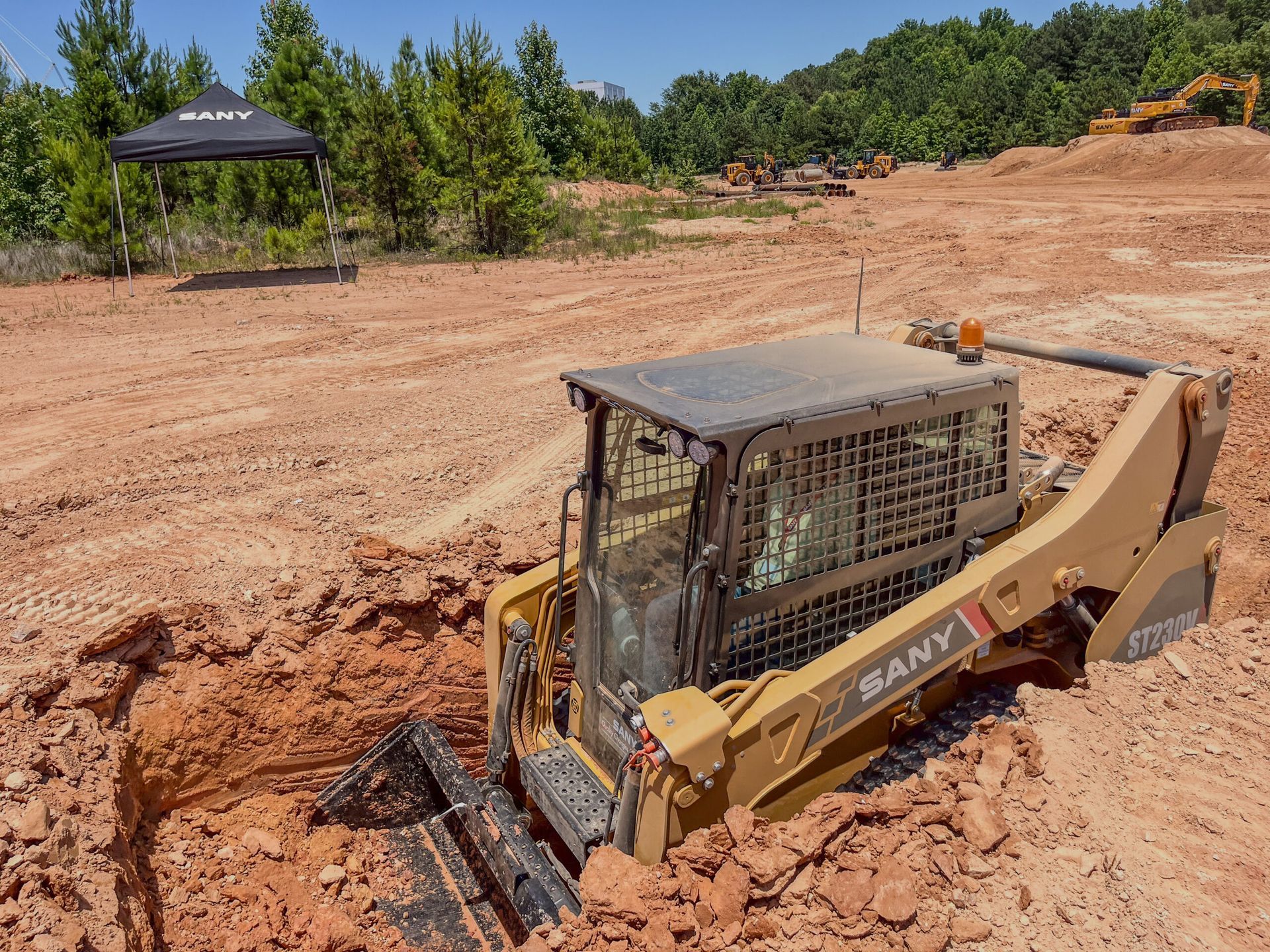
If your work mix shifts, pairing a backhoe plan with a track loader plan can cover more ground. It’s not about owning more iron for fun, it’s about having the right tool on the jobs you actually win.
Service plans, parts access, and financing, the practical ways to reduce risk
Planned maintenance is cheaper than surprise failures, and it’s easier to schedule around jobs. Parts access matters just as much. Waiting a week for a common hose or sensor is a profit killer.
If you’re buying, ask how service works, who to call for parts, how fast common items ship, and what support looks like when something breaks mid-week. If you’re financing, line up terms that fit your seasonal cash flow, not a perfect month.
Three ways to protect uptime this year:
- Follow a real maintenance interval : Fluids, filters, grease points, and inspections on a schedule.
- Have a parts plan : Know who to call for parts or service, and keep common wear items on hand.
- Use financing with intent : If a payment keeps cash available for payroll and fuel, it can lower stress and keep jobs moving.
Conclusion
A cheap backhoe for sale only pays off when it stays working, holds value, and has support behind it. Price matters, but total ownership cost is what decides if you made money or bought stress. Compare two machines like you’re comparing two employees, one shows up every day, the other calls out twice a week. Come in for a heavy machinery demo, book a tow and show, call sales or rental, or call for parts or service when you need straight answers.
Recent Posts